
Scottish Rugby performance director David Nucifora expects Borders to be supplying talent for national teams for years to come
Scottish Rugby Union performance director David Nucifora paid a visit to the Borders this week to reassure coaches and club administrators that he expects the region and its talent to be very much involved in the new performance pathway programme being launched.
The former Australian international hooker has been in that post for just over a year, taking on a role that’s been a troublesome one for the sport’s governing body of late, with few holding the title of director of rugby or performance since the game went professional era and that vacancy going unfilled for years after Jim Telfer and Ian McGeechan left Edinburgh’s Murrayfield Stadium early this century.
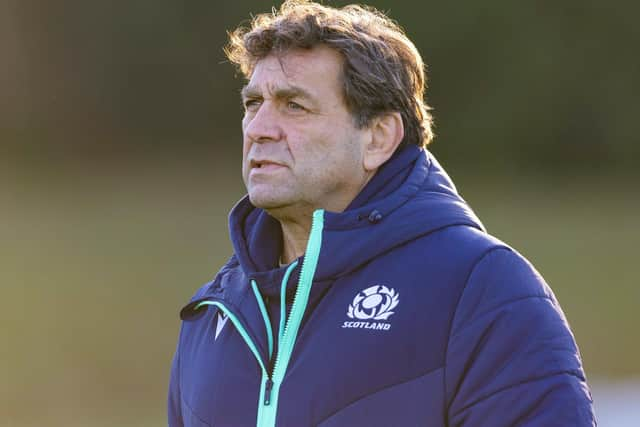

Nucifora, 63, is still only employed in a part-time advisory capacity, spending weeks at a time in Scotland and weeks back in his native Australia.
That arrangement also allowed him to take on an advisory role with the British and Irish Lions in the summer, helping them claim a series win in his homeland.
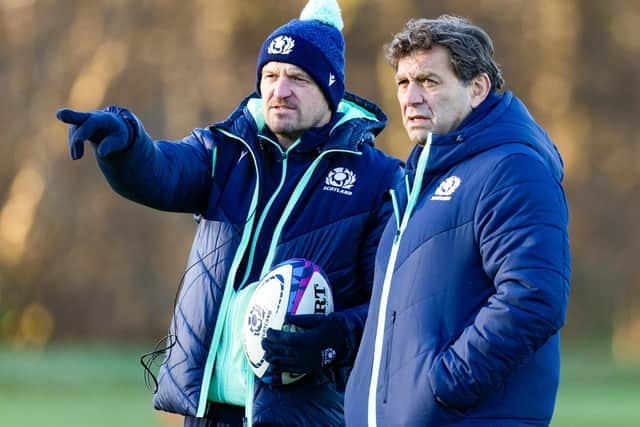
However, he has overseen a reshaping of the game’s performance management and talent pathways, and he has been on the road with former Scotland lock and Glasgow Warriors managing director Al Kellock, now the SRU’s head of performance pathways.
After taking part in an SRU workshop at Borders College in Galashiels on Monday, Nucifora told us: “ I think it's really important that we, as Scottish Rugby, make the effort to get out to people and meet personally the different stakeholders within the game to try and explain what we’re doing and why we’re doing it.
“With the talent pathway we’ve been discussing in Gala, for example, my role is performance director, but you can never isolate performance from the grass-roots and development part of the game.
“Performance exists because of participation, and you have to ensure that there are levels of participation there that are healthy, and we’re all tasked with that.
“We all have different roles, from coaching at clubs, schools, youth teams, whatever. None of us is any more important than anyone else and I suppose that’s one of the things we want to make clear to people, that we can’t do this on our own. We have to do it with the help of a lot of other people.”
Nucifora’s name stems from his Italian family roots but he is born and bred Australian. He came through Brisbane schools’ ranks as a hooker, played for Queensland and was part of the Rugby World Cup-winning Australia squad of 1991.
As a coach, he steered the Brumbies to the Super Rugby title in 2004 and then led the Auckland Blues, but since 2009 he has held high-performance roles with the Australian Rugby Union and, for the past ten years, their Irish opposite number. That latter role saw Ireland become No 1 in the world rankings and successive Six Nations champions, prompting the SRU to make a move for his services last year in the hope of similar success.
The key area for Nucifora’s attention in his first year in post has been talent pathway and that has caused some controversy following the announcement earlier this year that the number of players in the academy system is being reduced.
Explaining that move, he said: “We are trying to do something a little bit different from what’s been done before.
“Our numbers are tighter but the resources we’re putting into performance development are greater, so that we can produce a stronger system for the talent identified and how they are brought through.
“It is a very purposeful decision – it’s not about saving money – to reduce the numbers that we’ve brought in and increase our spend on our resources to give the players that are in there access to more individualised resource, be it coaches, strength and conditioners, nutritionists, analysts, creating an umbrella of support around them like they’ve never had before in Scotland.
“The model is designed for ins and outs, so that people who don’t make the cut first up have other access points all the way along this pathway, which also means for people that don’t live up to the opportunity, well, they can be pushed out to allow someone who’s doing better to come in.
“Key to that is all the people in this room helping us in the Borders to identify that talent, at whatever stage they see it, and communicating with us to ensure we don’t miss players who possibly develop a bit later than others.
“When you’ve got a small pool of players, as we have in Scotland, you’ve got to try and create a competitive environment, and that is going to be a real focus for us.
“Nothing comes easy. People are going to have to work for it, and competition is at the heart of that.
“Performance without internal competition won’t get the level of performance that’s required, so we’ve got to try and create that.
“These things, these steps along the way, are part of that.”
Acknowledging the contribution of the region to their national teams over the years – having supplied them with players such as Roy Laidlaw, John Rutherford, Gary Armstrong, Doddie Weir, Chris Paterson, Ross Ford and Darcy Graham over the years – Nucifora added: “The Borders is really important to us.
“Scotland can’t afford for any area to drop away or drop off.
“I’m not a local but I’m aware of the history of the Borders and its rugby, and I know a lot of the players that have come through and the quality that is still coming through from this area – and that’s why we’re here in Gala.
“A big part of this programme is our staff going into more rural areas, and instead of asking kids to come to us, we go to them and into their play environments.
“Hopefully, the benefit of that is twofold – we’re supporting the identified individuals but we’re also adding value to the coaching, clubs and schools that we’re stepping into.
“I think if we can build that trust in areas like the Borders and show people that we appreciate what they do and that there’s value in what they do, you keep the game healthy.”