
Kelso Abbey set to reopen to the public after safety works
The Borders’ oldest abbey is to be reopened to the public after a concerted effort by local people and Historic Environment Scotland (HES) to find ways to make the ruins safe.
Kelso Abbey was also the largest in the region when fully built and one of the most important centres in Scottish religion and politics after Tironensian monks moved their base from Selkirk to Kelso in 1128.
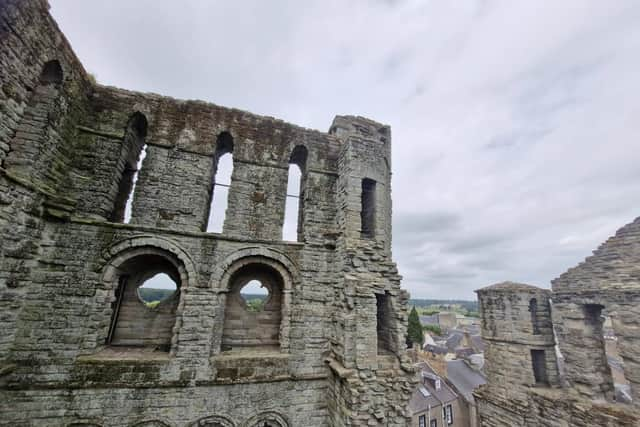

The son of David, King of Scots, was interred in Kelso Abbey, James II was killed nearby and the infant James III’s coronation was held in the Abbey.
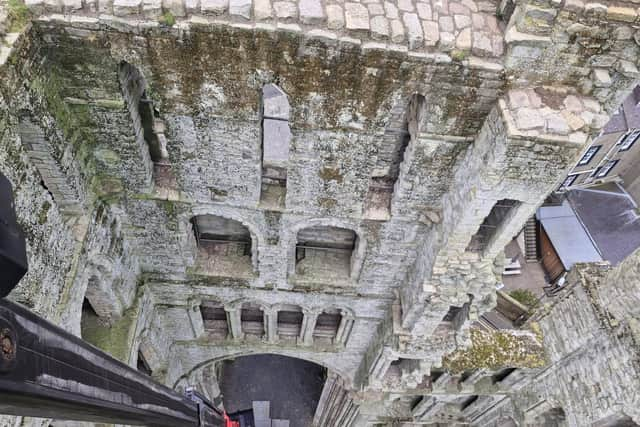
There are major plans being developed to celebrate the 900th anniversary of the Abbey, which suffered attacks throughout the centuries, but doubts over its use surfaced when its gates were locked following the Covid pandemic after Historic Environment Scotland discovered a number of concerns with decaying stone.
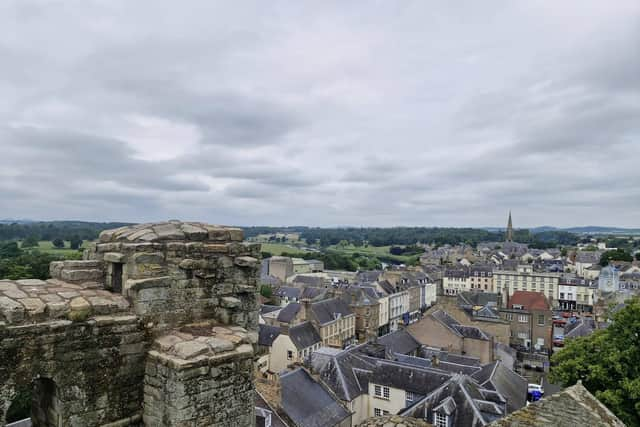
With it being viewed as a jewel in the Borders’ and Scotland’s tourism industry, and its closure having damaging effects on visitor numbers, efforts have been ongoing in recent years involving Kelso Community Council, the Kelso Heritage Society and the Duke of Roxburghe, whose Ker family was handed ownership of the Abbey in the 17th Century. At a meeting last week long-awaited good news was shared.
Chair of the Kelso Heritage Society, Colin Henderson, explained: “Hats off to Historic Environment Scotland because they have pulled out the stops and, if all the processes are squared away in the next few weeks, Kelso Abbey will reopen to the public at the end of July, which is tremendous.
“A number of organisations in the town have been working together to look at the future of the Abbey and how we mark its 900th anniversary.
“The Duke of Roxburghe stepped in as Chair and he has been instrumental in both funding consultancy work and helping us work with HES on this project.
“In truth, we didn’t think we would see it reopen, certainly in our lifetime, but I have to say that HES, the Duke and everyone involved in meetings have been very positive in exploring every possible route to reopening the Abbey.
“The end result was HES throwing most of their team at this project over the last few months, bringing surveyors, architects, highly-skilled tradespersons and even drone pilots to Kelso, and it has brought the result we hoped for.”
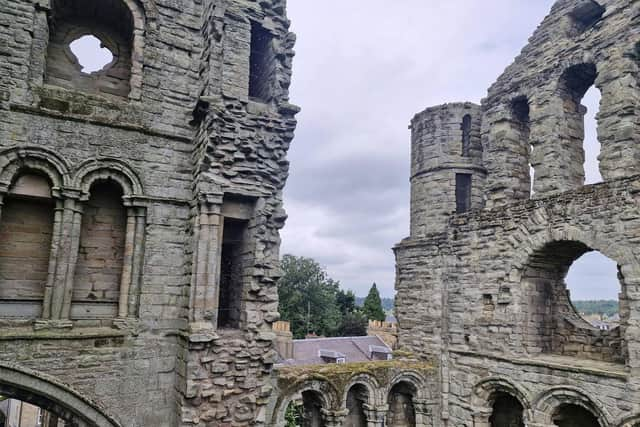
Colin explained that a combination of natural age deterioration and cement being used for repairs in the 1950s instead of specialist resins meant that extreme wet weather had dissolved an increasing number of bricks.
“That made many parts of the building unsafe, which is understandable,” he said.
“But with all the experts working together they have been able to identify the main areas of concern, remove the more dangerous stones and three highly skilled female stonemasons have been busy in recent weeks using resins and netting to make stones safe.
“We have been told that these are short to medium term measures, and the Abbey may close again briefly after severe weather for checks, but we’ll take that knowing that for the most part the Abbey gates will be open again from the end of July, and we can plan its future again.”