
The Cross Border Connection Project- key considerations for landowners are important
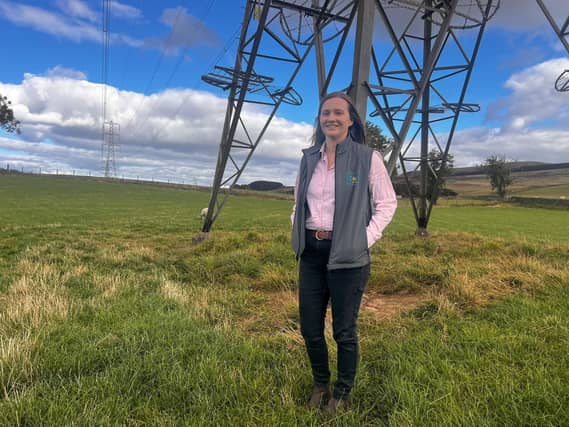

The Cross Border Connection Project, part of the Great Grid Upgrade, will see new 400kV transmission lines linking Scotland and England through north Cumbria. The scheme, developed jointly by Scottish Power Energy Networks (SPEN) and National Grid Electricity Transmission (NGET), will have a significant impact on landowners and farmers in the Borders and north Cumbria.
SPEN is advancing plans on routes between the proposed Gala North and Teviot substations and the border, while NGET is currently consulting on the English side. SPEN is around a year ahead in its consultation process, but both organisations must align before construction begins.
Landowners are urged to review proposals carefully and take professional advice early. NGET has now opened consultation in England, with feedback on this initial consultation closing on December 10.
Kerry Clark, Senior Land Agent at Davidson & Robertson (D&R), stresses that early engagement is vital: “It is important to consider wider impacts and any potential unforeseen consequences, so the best time to negotiate better terms is at the start. Projects like this are complex and long-term, and early professional advice often saves time and money later.

"D&R is already advising clients on the project and helping them to provide feedback at this stage. Your reasonable agent and legal fees are likely to be reimbursed by the operator as part of your compensation.”
The top five considerations the D&R team suggest as soon as notification is received are:
Appoint or contact your Land Agent as soon as you know your land will be impacted by the works. The earlier a Land Agent is engaged to represent you; the more scope they have to achieve the best outcome for your business. You are likely to have reasonable professional advice costs covered by the Statutory Undertaker, in this case SPEN or NGET, which means you can receive professional advice from the earliest stage and throughout the development process to ensure that you are fairly represented and fully compensated.
Do not sign anything until you have taken advice as this could result in you missing out on compensation. You are entitled to professional advice as part of this process, and it’s crucial to take this up before signing any consents or agreements. Our experience and expert industry knowledge enable us to negotiate on our clients’ behalf to ensure they are being compensated fully in all areas.
Mitigate losses – You are responsible for ensuring that all losses, disturbances, and costs incurred as a result of the works are mitigated as far as possible, where reasonable to do so. With this in mind, it is vital that you understand how the proposed works will impact you and your land, and you need to mitigate the impact as much as possible.
Know your rights – a good Land Agent will advise fully on what your rights and options are and will be able to explain exactly what is expected of you, so the earlier you engage the better. Not everyone knows the extent of what can be claimed, so they can clarify that for you - as a general rule, claims fall under five key considerations which are: land take, disturbance, reinstatement, injurious affection and client time.
Record your time – your time is valuable – keep a detailed diary of the time you spend talking with statutory undertakers, with your Land Agent, and in accommodating the works which leads to a loss to your business so that this can be claimed for. This is an area often overlooked by farmers but is a very valid claim.”
Concluding, Kerry said: “Whilst the electricity companies have statutory powers allowing them to construct new transmission lines, there is often much that can be negotiated, certainly on compensation packages and mitigation measures as well as longer term access for maintenance.
“Once the works are completed, the utility company is duty bound to reinstate the land back to its’ previous state, to the landowner/tenant’s reasonable satisfaction. It can sometimes take several years for land to get back to full production and, up until that point, compensation can be claimed to ensure that farmers are not left any worse off as a result of the works.”
D&R has a specialist utilities, energy and infrastructure team that is well versed with work on transmission links and members of NFUS faced with infrastructure issues, can access the free Utilities Helpline on 0131 609 9717 or [email protected] Non members can contact D&R direct in Edinburgh on 0131 449 6212.